
How do you correctly calculate the power output for a sauna stove?
October 2, 2026 at 11:57 am,
No comments
Selecting the right power output for the sauna stove (or heater) is the most critical step in setting up a sauna. If the stove is underpowered, you will grow tired of waiting for the sauna to heat up, and the metal and welded seams will quickly burn out. If the stove is too powerful, the air in the steam room will heat up instantly, but the stones inside the stove won't have time to get hot. Consequently, instead of soft steam, you will experience a "sauna effect" characterized by scorching air.
In this article, we will look at a simple calculation formula and all the relevant factors that need to be considered.
1. Basic formula for calculating volume
The primary parameter used when selecting a stove is the volume of the steam room in cubic meters (m³).
To determine the volume, multiply the sauna's length, width, and height:
Standard calculation: On average, 1 to 1.2 kW of stove power is required for every 1 m³ of steam room volume.
Example: If your steam room measures 2.5 x 2 meters with a ceiling height of 2.2 meters, the volume is 11 m³.
Multiply by the coefficient (11 x 1.2) to get the minimum rated stove power—approximately 13–14 kW.
2. Why the basic calculation isn't enough: the power reserve
Real-world conditions in a sauna always differ from ideal mathematical calculations. The figure derived above must be adjusted to account for heat loss. Be sure to consider the following factors:
• Presence of uninsulated (exposed) surfaces
If the steam room features unplastered brick, concrete, or stone surfaces, or large areas of glass, they will absorb a significant amount of heat.
What to do: Add 20–30% to the calculated power requirement. For example, add approximately 1–1.5 kW for every square meter of glass door or window.
• Winter usage
If the sauna is used year-round and the walls freeze through completely in winter, the stove will require a massive amount of energy just to heat the structure of the room itself.
What to do: For saunas used in winter in regions with harsh climates, plan for a power reserve of at least 30–50%.
• Interior finishing materials
Solid logs or thick timber beams heat up more slowly than frame walls with foil insulation.
If the stove is fired from an adjacent room (such as a changing room), some of the heat will be lost to that space. This is actually an advantage for the anteroom, though the stove itself should be chosen with a slight power margin.
3. Power requirements based on intended use
For private (family) saunas: A standard calculation with a small margin for winter use is sufficient. The priority is achieving a comfortable, gentle microclimate and ensuring the stones are well-heated.
For commercial saunas (e.g., in guesthouses or recreation centers): Stoves operate under heavy loads multiple times a day. Here, high durability, metal thickness, and a power margin of at least 40% are critical, as the stove must reach operating temperature as quickly as possible between groups of guests.
Summary: Checklist before buying a sauna stove
Calculate the exact volume of the steam room in cubic meters.
Assess the quality of thermal insulation and the presence of "cold zones" (windows, tile surfaces, brickwork).
Add 20–30% to account for winter frosts or rapid heat loss.
Ensure the chosen model has sufficient stone capacity (after all, a sauna stove is purchased primarily for quality steam, not just for heating the room).
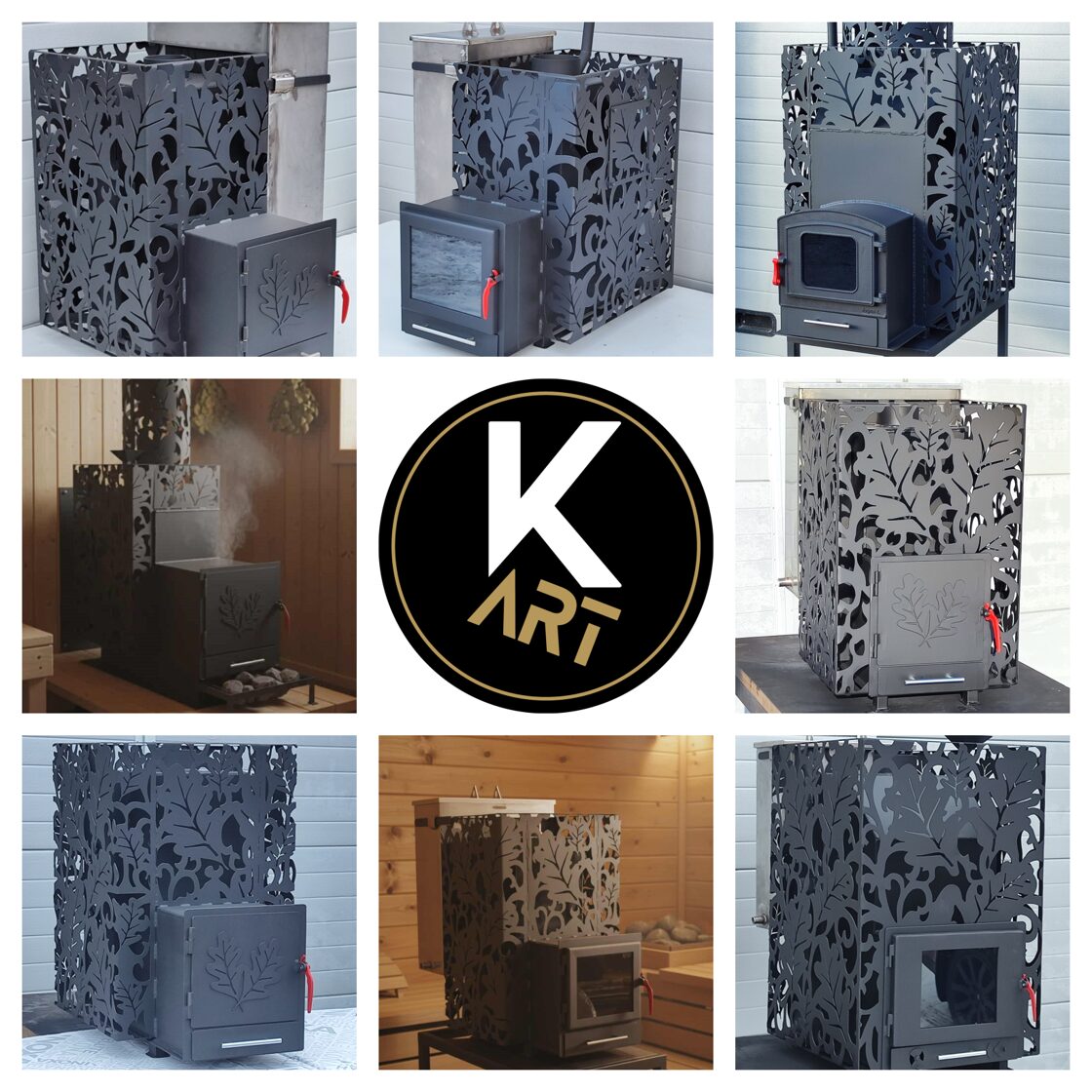
Find the K-ART stove range here:/products/category/sauna-stoves/
No comments
Leave a reply
Cart
Cart is empty.